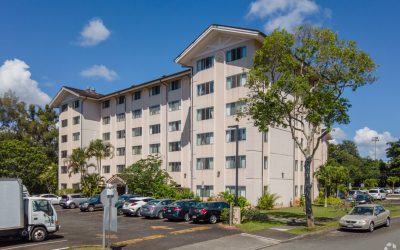
If you are searching for 2026 Low-Income Housing Tax Credit (LIHTC) income limits, you are likely trying to determine whether your family qualifies for an affordable apartment in Hawaii. If you are a property manager or landlord, you need to verify that your residents meet current eligibility requirements.
The LIHTC program relies on Area Median Income (AMI) thresholds that adjust annually based on household size and geographic county. Due to Hawaii’s distinct island geography and living costs, qualification numbers vary significantly from county to county.
At Hawaii Affordable Properties, Inc., we manage over 4,000 residential apartments across Oahu, Maui, the Big Island, and Kauai. We assist local families and property owners in navigating HUD income guidelines, application documentation, and rent restrictions across the state.
What Are LIHTC Income Limits and How Do They Work?
Established under Section 42 of the Internal Revenue Code, the LIHTC program encourages private developers to build and maintain affordable rental housing using federal tax incentives. In exchange, property owners reserve designated apartments for households earning at or below specific AMI targets.
The U.S. Department of Housing and Urban Development (HUD) calculates and publishes annual income limits for every county. Properties must satisfy specific set-aside elections:
- 20-50 Rule: Minimum 20% of apartments designated for households at or below 50% AMI.
- 40-60 Rule: Minimum 40% of apartments designated for households at or below 60% AMI.
- Income Averaging: Mix unit designations between 20% AMI and 80% AMI, provided the total property average remains at or below 60% AMI.
Income averaging offers valuable flexibility in high-cost island markets. For instance, a working family earning 75% AMI might qualify under an income-averaged building set-aside, whereas they would exceed the traditional 60% cap.
Income averaging expands access for local workforce households who earn slightly too much for traditional 50% or 60% limits, yet struggle with high market-rate rents.
2026 Baseline Household Income Limits by Hawaii County
Income thresholds fluctuate across Hawaii’s four main island counties because median family incomes differ by region. The table below outlines estimated baseline eligibility tiers across representative household sizes:
| Hawaii County / Island | 1-Person Household (50% AMI) | 1-Person Household (60% AMI) | 4-Person Household (50% AMI) | 4-Person Household (60% AMI) |
|---|---|---|---|---|
| Honolulu County (Oahu) | $49,400 | $59,280 | $70,550 | $84,660 |
| Maui County (Maui) | $43,500 | $52,200 | $62,150 | $74,580 |
| Hawaii County (Big Island) | $39,200 | $47,040 | $56,000 | $67,200 |
| Kauai County (Kauai) | $41,800 | $50,160 | $59,700 | $71,640 |
Note: Figures reflect standard county baseline reference estimates. Individual property compliance guidelines may vary based on regulatory agreements.
Geographic variance plays a major role in applicant qualification. A single individual earning $50,000 per year qualifies for a 60% AMI apartment in Honolulu County, but exceeds the 60% cap in Hawaii County. Exploring our multi-island portfolio on Oahu Residential Properties, Big Island Residential Properties, and Maui Residential Properties helps you identify options tailored to your local income level.
How LIHTC Rent Limits Are Calculated
Income limits determine who qualifies to move in, while rent limits dictate maximum allowable monthly charges. Federal regulations state that gross housing costs cannot exceed 30% of the imputed income limit for a designated unit size.
Gross rent includes tenant-paid utilities. Property managers must deduct an annual utility allowance established by local housing authorities to establish maximum collectible net rent.
Step-by-Step Sample Rent Calculation (Honolulu 60% AMI 1-Bedroom)
- Calculate Imputed Income Limit: Assume 60% AMI for a 1.5-person household baseline is $63,500.
- Determine Monthly Gross Rent Cap: ($63,500 x 30%) / 12 Months = $1,587.50 Gross Rent Limit.
- Deduct Utility Allowance: If monthly utility allowances equal $150.00, maximum tenant-paid rent is $1,437.50 per month.
Interactive Eligibility and Financial Planning Tools
Navigating income qualifications and monthly budgeting requires reliable calculations. We offer interactive web tools to help tenants and applicants evaluate household financials:
- AMI Eligibility Checker: Verify your household gross income against local island thresholds before completing an application with our AMI Eligibility Checker.
- Paycheck Pacer Tool: Match your income dates to rental deadlines to avoid late charges using the Paycheck Pacer Tool.
- Hawaii Real Cost Budgeter: Plan for island utility, transport, and grocery expenses alongside rent using the Hawaii Real Cost Budgeter.
Documentation Required for Income Verification
Qualifying for an affordable home requires documenting all household financial streams. Recent updates under the Housing Opportunity Through Modernization Act (HOTMA) streamlined verification hierarchies for housing providers.
What Counts as Household Income?
- Gross employment wages, tips, and overtime pay.
- Social Security benefits, disability compensation, and pensions.
- Unemployment benefits, alimony, and regular cash contributions.
- Investment returns and interest from personal assets over $50,000.
Document Checklist for Applicants:
- Government Identification: Valid photo IDs and Social Security cards for all adult members.
- Earned Income: 2–3 months of consecutive pay stubs and prior year W-2 statements.
- Tax Documentation: Signed federal tax returns from the previous 1–2 years.
- Financial Accounts: 3–6 months of complete checking and savings account statements.
How to Apply for Housing in Hawaii
The Hawaii Housing Finance and Development Corporation (HHFDC) oversees state tax credit allocations. Because demand for affordable rentals remains strong, waitlists can range from a few months to longer durations depending on location.
- Identify Communities: Review available developments across Oahu, Maui, Kauai, and the Big Island.
- Submit Applications: Apply directly to individual management offices to join open waitlists.
- Gather Verification File: Compile income and asset records early to prepare for file review.
- Complete Compliance Interview: Meet with site managers to verify income qualifications upon selection.
- Execute Lease Agreement: Sign lease covenants once compliance eligibility is formally approved.
In addition to multi-family apartments, supporting local neighborhoods requires commercial spaces for island services. View our commercial spaces on our Commercial Properties page.
Key Compliance Rules for Property Managers
Property managers must implement revised HUD limits within 45 days of official publication. Key regulatory points include:
- Over-Income Tenant Protection (140% Rule): Existing tenants whose income rises above 140% of the maximum limit do not face eviction. The Next Available Unit Rule requires that the subsequent available unit of comparable size be leased to an income-qualified household.
- Record Retention: Management offices must retain tenant intake records and initial income certifications for at least 6 years beyond the building’s credit period, maintaining documentation across the property’s extended use period.
Frequently Asked Questions (FAQ)
1. What are the income class brackets for Hawaii affordable housing?
HUD classifies extremely low income as 30% AMI, very low income as 50% AMI, and low income as 80% AMI. LIHTC developments typically serve households falling within the 30% to 80% AMI ranges.
2. Do my income limits get re-checked after I move in?
Yes. LIHTC developments require annual tenant recertification. Property managers verify annual household gross income to confirm program compliance.
3. How does LIHTC housing differ from Section 8 Housing Vouchers?
Section 8 Housing Choice Vouchers are portable tenant-based subsidies that move with the voucher holder. LIHTC is a property-based tax incentive program where affordable rent restrictions are tied directly to specific apartment units.
4. What happens if I am self-employed and want to apply?
Self-employed applicants must present two years of signed tax returns, schedule C tax forms, and profit-and-loss statements to verify baseline annual net business income.
5. Can I apply for LIHTC properties on multiple islands at once?
Yes. You can submit applications to multiple properties managed by HAPI across Oahu, Maui, Kauai, and the Big Island simultaneously to expand your housing opportunities.
Start Your Housing Application Today
Understanding 2026 LIHTC income limits helps you take the next step toward securing an affordable apartment in Hawaii.
Contact our leasing team today to check open waiting lists, verify your income bracket, and plan your move.
HAPI: Locally Owned and Trusted Since 1992.