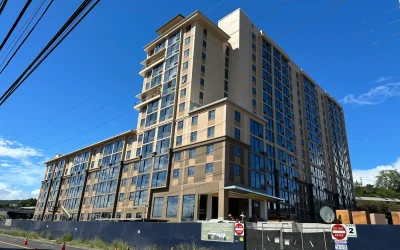
Earning a modest income in Hawaii presents distinct financial challenges. A renter across our islands needs roughly $88,000 annually to afford a standard two-bedroom apartment at fair market rent. Yet most affordable housing assistance programs serve households earning far less than that baseline. The central issue is knowing which programs you qualify for, how eligibility calculations work, and how to navigate application channels efficiently.
With only 1 in 4 eligible households receiving federal rental assistance nationally, knowing your options and acting strategically makes the difference between sitting indefinitely on a waitlist and moving your family into a secure home. At Hawaii Affordable Properties, Inc., we work every day to bridge this gap by developing and maintaining accessible housing communities across our state. Whether you are looking for an apartment on Oahu, Maui, Kauai, or the Big Island, understanding how these housing models operate gives you a clear roadmap to securing a stable home.
What Affordable Housing Programs Exist and How They Differ
Three main affordable housing program models serve renters across Hawaii, each governed by separate eligibility criteria, funding streams, and management procedures:
- Section 8 Housing Choice Vouchers: This federal program provides portable rental assistance directly to qualifying tenants. You apply through your local county housing authority. Once granted a voucher, you search for a qualifying market-rate rental unit. The voucher program pays a designated subsidy directly to your private landlord, while you contribute the remaining portion of the rent based on your calculated income.
- Project-Based Vouchers & Public Housing: Unlike portable Section 8 vouchers, assistance in these communities is tied directly to specific properties. You submit applications to individual building management offices or state housing developments. If you choose to move out of the property in the future, the rental subsidy remains attached to the building unit for the next qualifying tenant.
- Low-Income Housing Tax Credit (LIHTC) Properties: Private management firms such as our team at Hawaii Affordable Properties, manage these housing developments. LIHTC communities offer apartments featuring reduced, below-market rents in exchange for tax credits that support construction and operational maintenance. You apply directly to individual housing communities rather than applying through a county-wide voucher queue.
Because LIHTC communities feature wait times often measured in weeks or months rather than the multi-year queues common to Section 8 voucher lists, they represent one of the fastest direct routes to obtaining an affordable home in Hawaii. We manage a diverse portfolio across our islands, including residential properties on Oahu, residential properties on the Big Island, residential properties on Maui, and versatile spaces within our commercial properties division.
Core Eligibility Requirements That Apply Across Programs
Income verification forms the foundation of every affordable housing assessment. Thresholds are established annually by the U.S. Department of Housing and Urban Development (HUD) and calculated as percentages of the Area Median Income (AMI) tailored to each individual island county.
| County Location | 30% AMI (4 Persons) | 50% AMI (4 Persons) | 80% AMI (4 Persons) |
|---|---|---|---|
| Honolulu County (Oahu) | $40,500 | $67,650 | $108,250 |
| Maui County | $41,700 | $69,550 | $111,300 |
| Hawaii County (Big Island) | $35,000 | $58,350 | $93,350 |
| Kauai County | $40,200 | $67,050 | $107,300 |
Figures based on official HUD Area Median Income guidelines and subject to annual local adjustments.
Beyond income verification, applicants must confirm citizenship or eligible immigration status using official documentation such as Form I-551 (Permanent Resident Card) or Form I-94. Mixed-status households with both eligible and ineligible family members can receive prorated rental assistance based on the number of qualifying individuals.
Background evaluations review criminal histories and rental track records. Federal rules prohibit housing providers from issuing blanket application denials based solely on past arrest records without a conviction. Convictions trigger individual assessments that evaluate the specific nature of the offense, time elapsed, and evidence of rehabilitation. Federal regulations enforce mandatory lifetime exclusions only for registered sex offenders and individuals convicted of manufacturing methamphetamine on federally supported property.
Section 8 Vouchers: Income Limits and Priority Categories
Section 8 programs prioritize extremely low-income applicants earning at or below 30% of their county AMI. Nationally, 75% of all new vouchers are reserved for households within this bracket. Once income eligibility is established, your position on a voucher waitlist depends on local preference categories set by county housing offices.
Common priority classifications include:
- Military veterans and active service members
- Families experiencing homelessness or fleeing domestic violence
- Residents displaced by local government operations or natural disasters
- Local county residents and employed working families
What to Do When Waitlists Close
Because demand far outpaces supply, county housing authorities routinely close Section 8 waitlists for extended periods. Instead of waiting passively for waitlists to reopen, we advise applicants to monitor state releases via the Hawaii Housing Finance and Development Corporation (HHFDC) while simultaneously applying directly to active LIHTC communities across the islands.
LIHTC Properties: Faster Access, Different Rules
LIHTC housing developments form the largest supply of affordable rental apartments nationwide. Rather than placing your name on a central government waiting list, you submit your application directly to the management team at the specific property you wish to join. Rent limits are restricted based on AMI brackets assigned to individual apartment units, typically set at 30%, 50%, or 60% AMI limits, rather than fluctuating dynamically with your exact monthly income changes.
At Hawaii Affordable Properties, our site teams maintain regulatory tax credit compliance standards while walking you through the intake verification and yearly recertification process. A major benefit of LIHTC living is long-term stability: if your household income increases moderately after move-in, you generally retain your affordable housing status without being required to vacate your home.
Special Circumstances: Medical Hardship, Students, and Income Changes
Unique life circumstances can alter how your household income is evaluated:
- Medical Expense Deductions: Elderly or disabled households can deduct out-of-pocket medical expenses that exceed 3% of their annual gross income, lowering their calculated income to help satisfy qualification limits.
- Full-Time Student Status: Full-time post-secondary students face strict application limits in subsidized housing unless they meet explicit HUD exemptions, such as being a single parent, married, a military veteran, or receiving specific public assistance. LIHTC programs offer distinct flexibility for eligible student households.
- Reporting Income Adjustments: Tenants are required to report significant changes in household income promptly. Downward adjustments in income can lower your monthly rent obligations in voucher-assisted units, while transparent reporting ensures full compliance with program regulations.
Essential Self-Service Financial & Planning Tools
To help you organize your finances and prepare your application materials, we offer free interactive utilities directly on our website:
| HAPI tool | Useful for |
|---|---|
| AMI Eligibility Checker | Reviewing household income against applicable AMI information |
| Resource Compass | Finding housing and community resources |
| Hawaii Real Cost Budgeter | Considering broader Hawaii living costs alongside housing expenses |
How to Apply: Documentation and Strategy
Preparing your application materials in advance streamlines the verification process and prevents avoidable delays:
- Gather Key Documents: Collect two months of recent pay stubs, W-2 forms or tax returns, current bank statements, photo IDs, Social Security cards, and birth certificates for every household member.
- Apply to Multiple Locations: Submit applications across several LIHTC developments and open waitlists simultaneously. Accepting placement at one property does not restrict your ability to remain on lists elsewhere.
- Respond Promptly: Housing providers often enforce tight 10- to 14-day response windows for written notices or additional documentation requests. Keep your mailing address and phone number updated with management offices to avoid losing your spot.
Our management team guides applicants through every step across our residential communities statewide.
Start With What’s Available Now
Understanding eligibility guidelines is the first step toward securing an affordable home. Review your household income against your county’s AMI thresholds, gather your financial records, and submit applications directly to active properties.
At Hawaii Affordable Properties, new rental opportunities become available regularly across our properties. Explore our listings today to find an affordable residence that suits your family’s needs.
Frequently Asked Questions (FAQ)
1. What is the difference between Section 8 vouchers and LIHTC properties?
Section 8 offers a portable rental subsidy that moves with the tenant. LIHTC properties offer specific units with capped below-market rents, requiring direct applications to individual site management offices.
2. How is Area Median Income (AMI) calculated in Hawaii?
HUD calculates local AMI levels annually based on household sizes and county economic data. Because wages and living expenses vary by island, threshold figures differ across Oahu, Maui, Kauai, and the Big Island.
3. Will my rent increase automatically if my income rises at a LIHTC property?
No. LIHTC rents are fixed based on property-specific AMI limits rather than fluctuating monthly with tenant earnings. Moderate income increases after move-in will not cause sudden rent spikes or lead to eviction.
4. Can full-time college students qualify for affordable housing?
Full-time students must meet specific HUD exemption criteria to qualify. Valid exemptions include being a single parent, married, a military veteran, or enrolled in government-sponsored job training programs.
5. How long are waitlists for properties managed by Hawaii Affordable Properties?
Waitlist durations vary by location, unit size, and turnover rates. Because LIHTC developments maintain site-specific waitlists, placement often moves faster compared to centralized housing authority lists.
Ready to Find Affordable Housing?
Contact our team today to learn more about available properties, check unit status, and receive assistance with your application.
HAPI: Locally Owned and Trusted Since 1992.