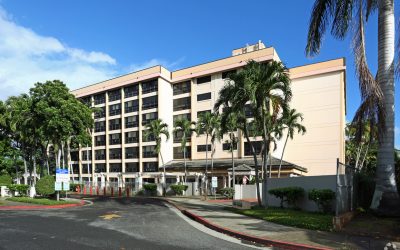
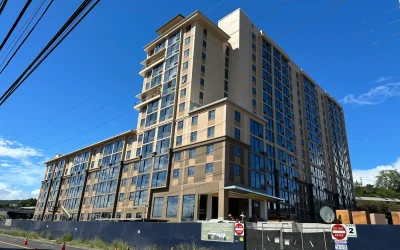
Kakaako has established itself as one of Honolulu’s most desirable urban neighborhoods, offering a dynamic live-work-play lifestyle with close proximity to Ward Village, SALT, and Ala Moana Beach Park. However, this rapid urban revitalization has created a stark affordability gap for local working families. With median private market rents in Kakaako climbing past $2,400 per month and only a small percentage of new residential developments designated as affordable, securing housing in this central district can feel like an impossible challenge.
The struggle to find reliable, affordable housing is not unique to urban Oahu. On the neighbor islands, local families face similar economic pressures. In West Hawaii’s Kona district, for example, the rental vacancy rate sits at a critical 2.1%, forcing low-to-moderate-income applicants to wait an average of 18 to 24 months to secure an apartment. Across the state, over 60% of Hawaii renters are classified as cost-burdened, meaning they pay more than 30% of their gross monthly income just to keep a roof over their head.
For property owners, developers, and housing agencies, managing affordable real estate assets in this environment requires a level of regulatory and operational expertise that conventional property managers cannot support.
From navigating Low-Income Housing Tax Credit (LIHTC/Section 42) compliance and HUD Section 8 contracts to managing USDA Rural Development programs and county-specific covenants, a single tracking error can result in severe tax credit recapture penalties or loss of subsidies.
Hawaii Affordable Properties, Inc. (HAPI) has been locally owned and operated in the islands since 1992. We manage over 4,000 apartments across 33 projects statewide, serving as the bridge between strict regulatory compliance and high-quality residential living.
This comprehensive 2026 guide explores the Kakaako rental landscape, details our professional asset management services, and outlines our proven onboarding process for owners.
The Challenge: The Kakaako Squeeze vs. Neighbor Island Realities
The rental market in Kakaako is exceptionally competitive. New residential towers are required by the Hawaii Community Development Authority (HCDA) to feature dedicated workforce housing set-asides. However, the volume of applications continues to outpace supply:
- High Demand: It is common for a newly constructed Kakaako workforce building to receive over 3,000 applications for fewer than 200 available units, leading to competitive lottery draws.
- The “Compliance Maze”: For both applicants and on-site staff, processing these files is incredibly demanding. Verifying income under modern HOTMA (Housing Opportunity Through Modernization Act) rules, adjusting rents to match current Area Median Income (AMI) limits, and calculating precise utility allowances require trained, certified personnel.
- Statewide Pressure: On the neighbor islands, lower density does not equal lower demand. Rural properties on the Big Island, Maui, and Kauai face high occupancy rates, requiring hands-on property managers who can maintain high physical asset standards while keeping operational expenses low.
Our Services: Turnkey Affordable Housing Management
HAPI is not a remote, mainland-based corporation. Founded in Hawaii in 1992, we have spent over three decades building the certifications, relationships, and on-the-ground presence that affordable housing demands. We provide specialized, turnkey services to protect your assets and support your residents:
1. LIHTC Compliance & File Auditing
Our dedicated Compliance Department specializes in the complete lifecycle of Section 42 properties. We handle initial applicant screenings, manage mandatory annual recertifications, calculate maximum gross rent caps, and coordinate directly with the HHFDC. We utilize professional consulting services from Spectrum Enterprises to ensure our teams stay updated on changing federal guidelines.
2. HUD Program Administration
We hold extensive certifications to manage Section 8 Housing Choice Vouchers, Section 202 supportive housing for seniors, and Project-Based Rental Assistance (PBRA) contracts. Our on-site teams prepare properties to pass HUD’s updated NSPIRE physical safety inspections, ensuring all life-safety systems meet federal guidelines.
3. USDA Rural Development Coordination
HAPI manages USDA Section 515 rural rental housing properties across Hawaii’s neighbor islands. We administer Section 521 rental assistance payments, execute monthly USDA accounting reconciliations, and handle regional USDA compliance audits with certified accuracy.
4. Sophisticated Financial Reporting
We provide institutional lenders, tax credit investors, and housing finance agencies with clear, auditable financial statements. Our team utilizes cloud-based property management software to deliver monthly financial summaries, annual budget forecasts, and direct portal access for owners.
5. Complete Property Operations
From 24/7 emergency maintenance response to preventive facility management, we preserve the value of your real estate investments. Our on-island maintenance technicians understand Hawaii-specific environmental factors, including saltwater corrosion mitigation, high-humidity moisture control, and hurricane preparation.
Statewide Coverage: Serving Oahu and the Neighbor Islands
A responsive property manager must have boots on the ground on the islands they serve. HAPI anchors its statewide portfolio with physical regional offices on Oahu and the Big Island, providing local oversight across the counties:
HAPI Regional Operations Matrix
| Operational Region | Primary Neighborhoods Served | Key Program Focus | Local Management Hub |
|---|---|---|---|
| Honolulu County (Oahu) | Kakaako, Chinatown, Kalihi, Pearl City, Kapolei | LIHTC, HUD Section 202, HCDA Workforce Housing | Urban Honolulu / Kapolei Corridors |
| Hawaii County (Big Island) | Kona, Hilo, Ka’u, Waimea | LIHTC, USDA Section 515, Senior Independent Living | Kona & Hilo Regional Offices |
| Maui County | Kahului, Wailuku, Lahaina, Kihei | LIHTC, County Affordability Covenants | Maui Regional Division |
| Kauai County | Lihue, Kapaa, Koloa | LIHTC, HHFDC Extended Use Provisions | Kauai Regional Division |
How It Works: Our Onboarding Process for Owners
Transitioning a property to a new management firm requires careful planning to prevent compliance lapses or collection delays. At HAPI, we make the transition process smooth and transparent:
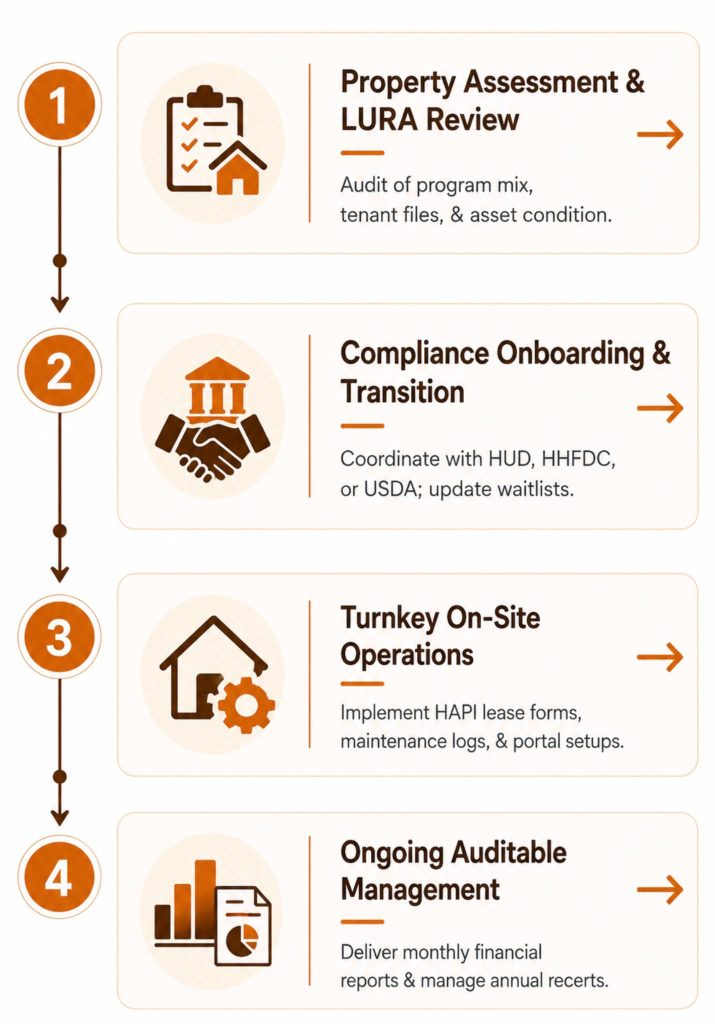
Property Assessment: We review your property’s Land Use Restriction Agreement (LURA), active funding sources, tenant population, and current operational budget to identify opportunities for improvement.
- Compliance Review: Our compliance specialists audit existing tenant files, identify and correct any documentation gaps, and coordinate with state housing finance agencies to ensure a compliant transition.
- Onboarding & Launch (30-45 Days): We transition day-to-day operations, establish local vendor agreements, implement our 24/7 maintenance dispatch, and set up your owner portal.
- Ongoing Management: We handle all leasing, tenant relations, annual income recertifications, monthly financial reporting, and agency audit coordination, allowing you to focus on your portfolio goals.
Client Feedback: Trusted by Owners, Residents, and Agencies
- Property Owner: “Hawaii Affordable Properties has been instrumental in maintaining our compliance and protecting our investment. Their local expertise and responsive management team give us complete confidence in our portfolio’s performance and regulatory standing.”
- Affordable Housing Resident: “The HAPI team helped us navigate the application process and made our annual recertification straightforward. They’re always available to answer questions, and the maintenance response is excellent. We finally found stable, affordable housing for our family in Hawaii.”
- Housing Agency Partner: “Their deep understanding of federal, state, and county programs makes them an invaluable partner. Hawaii Affordable Properties consistently delivers compliant, well-maintained properties that serve our community’s residents with dignity and professionalism.”
Frequently Asked Questions (FAQ)
What are the income limits for affordable housing in Kakaako?
Income limits are determined by Honolulu County’s Area Median Income (AMI), which HUD updates annually. Most Kakaako LIHTC properties target households earning between 30% and 60% of AMI. In 2026, a family of four on Oahu typically qualifies at the 60% AMI tier with an annual gross income of up to $91,200.
How long are the waiting lists for affordable units on Oahu?
Wait times vary significantly by property and bedroom size. High-demand urban properties in Kakaako and central Honolulu can have waiting lists of 2 to 5 years. HAPI’s average placement timelines range from 6 to 18 months because we coordinate vacancies across 33 properties simultaneously, providing a faster path than waiting for a single public housing opening.
What happens during the annual tenant recertification process?
Federal programs require an annual verification of household income and composition to confirm continued program eligibility. HAPI’s compliance team contacts residents 90 days before their anniversary date to schedule an appointment and collect updated income records. The meeting takes roughly 30 minutes, and we handle all federal and state reporting on your behalf.
Access Our Online Planning Tools
We offer free, interactive digital tools to help residents plan their budgets and assist property owners in evaluating their collection efficiency:
Partner with Hawaii’s Local Compliance Authority
Managing affordable housing in Hawaii requires a dedicated, compliance-first approach. Whether you are an institutional owner seeking to protect your tax credit portfolio, a housing agency looking for certified program administration, or a local family searching for an affordable place to call home, HAPI provides the local presence and regulatory experience you need.
Contact our Honolulu management office today to speak with a specialist and request a custom property management proposal.