In 2026, finding a place to live on Oahu continues to be one of the most significant hurdles facing local families. With median single-family home prices on the island consistently hovering near $1.1 million and average market-rate apartment rentals climbing past $2,400 per month, affordable housing is no longer just a policy term—it is the vital infrastructure that allows local working families, teachers, nurses, and kupuna to remain in Hawaii.
Navigating the various applications, waitlists, and income limits on Oahu can feel like trying to solve a complicated puzzle. However, securing a high-quality, income-restricted rental is highly achievable if you understand how the system works, what documents you need, and where to apply.
This comprehensive guide breaks down Oahu’s affordable housing landscape, details current 2026 income and pricing thresholds, and outlines a clear, step-by-step roadmap to guide your family into a stable home.
What Makes a Home “Affordable” on Oahu?
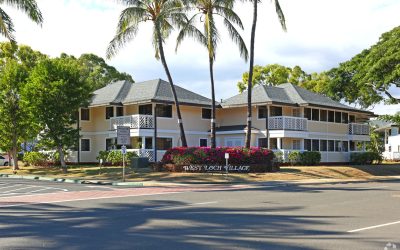
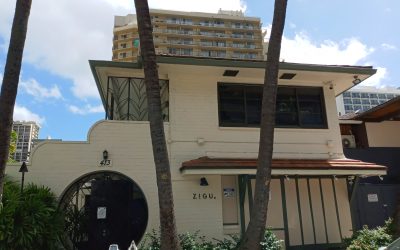
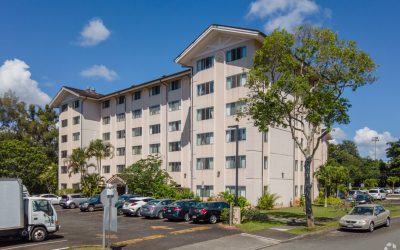
A common local misconception is that affordable housing equals low-quality construction or unsafe neighborhoods. In reality, modern affordable developments on Oahu are well-maintained, professionally managed communities integrated directly into established residential areas like Kapolei, Ewa Beach, Waipahu, and urban Honolulu.
The term “affordable housing” has a strict legal definition established by the U.S. Department of Housing and Urban Development (HUD) and the Hawaii Housing Finance and Development Corporation (HHFDC): housing costs (including rent and basic utilities) must not exceed 30% of a household’s gross monthly income.
Maximum Affordable Housing Cost = Gross Monthly Income × 0.30
To achieve this, the government partners with private developers and local operators like Hawaii Affordable Properties, Inc. (HAPI) to build and manage properties funded by three primary programs:
- Low-Income Housing Tax Credit (LIHTC) Properties: The largest source of affordable rentals on Oahu. Rents are set at flat, below-market rates tied to specific income tiers rather than changing dynamically with your individual monthly income.
- HUD Section 8 (Project-Based Rental Assistance): These subsidies are attached directly to specific apartment units. Eligible tenants pay exactly 30% of their adjusted monthly income, and the government covers the rest.
- Specialized Senior Housing: Communities restricted to kupuna aged 62 and older, offering structural accessibility features to help residents age in place.
2026 Rental Pricing: Affordable vs. Market Rates
To illustrate the true value of securing an affordable apartment on Oahu, the table below compares average 2026 affordable rental limits (set under standard 60% LIHTC program guidelines) against current Oahu market-rate averages:
2026 Oahu Rental Price Comparison
| Unit Size & Layout | Average Oahu Subsidized Rent (60% AMI) | Average Oahu Market-Rate Rent | Estimated Monthly Savings | Estimated Annual Savings |
|---|---|---|---|---|
| Studio Apartment | $1,050 – $1,250 | $1,900 – $2,200 | $850 – $950 | $10,200 – $11,400 |
| 1-Bedroom / 1-Bath | $1,150 – $1,350 | $2,100 – $2,400 | $950 – $1,050 | $11,400 – $12,600 |
| 2-Bedroom / 1-2 Bath | $1,350 – $1,600 | $2,600 – $3,100 | $1,250 – $1,500 | $15,000 – $18,000 |
| 3-Bedroom / 1.5-2 Bath | $1,550 – $1,850 | $3,200 – $3,800+ | $1,650 – $1,950 | $19,800 – $23,400 |
Affordable rent estimates reflect 2026 HHFDC baseline calculations adjusted for Oahu utility allowances. Actual rents vary by property and assigned income brackets.
What is Covered in Your Rent?
In almost all HAPI-managed affordable communities, your base monthly rent includes municipal water service, local sewer tracking, and trash collection. Residents are independently responsible for electricity (managed via Hawaiian Electric), home internet, and optional services.
To offset these utility costs, federal program rules apply a mandatory Utility Allowance deduction, which reduces your base rent invoice to ensure your total housing expenses stay under the 30% threshold.
Do You Qualify? 2026 Oahu Income Limits Explained
Eligibility for affordable housing is strictly governed by Area Median Income (AMI). Because Oahu’s cost of living is among the highest in the country, Honolulu County features significantly higher income limits than neighboring islands.
2026 Honolulu County (Oahu) Income Limits
| Household Size | 30% AMI Limit (Extremely Low) | 50% AMI Limit (Very Low) | 60% AMI Limit (Workforce Tier) | 80% AMI Limit (Moderate/Low) |
|---|---|---|---|---|
| 1 Person | ~$28,290 | ~$46,550 | ~$55,860 | ~$74,480 |
| 2 People | ~$32,310 | ~$53,200 | ~$63,840 | ~$85,120 |
| 3 People | ~$36,360 | ~$59,850 | ~$71,820 | ~$95,760 |
| 4 People | ~$40,380 | ~$66,500 | ~$79,800 | ~$106,400 |
| 5 People | ~$43,620 | ~$71,850 | ~$86,220 | ~$114,960 |
Figures reflect current 2026 HUD and HHFDC indexing for Honolulu County. For households larger than 5 people, verify the limits directly with our leasing team.
The Income Calculation Rules (HOTMA Compliance)
Under the federal HOTMA (Housing Opportunity Through Modernization Act) guidelines active in 2026, properties must verify all recurring income streams. This includes your hourly wages, self-employment earnings, Social Security, child support, and consistent financial gifts.
Net asset limits also apply: households holding more than $100,000 in certified net assets (excluding standard retirement accounts or approved trusts) are excluded from participating in subsidized rental programs.
B2C Tool: Check Your Eligibility Instantly
Don’t guess your compliance bracket. Our interactive tool evaluates your specific household footprint and income against current county guidelines: Check Your AMI Eligibility Now
How to Apply: The 2026 Step-by-Step Roadmap
Because affordable housing is in high demand on Oahu, securing a unit requires a clear, organized approach.
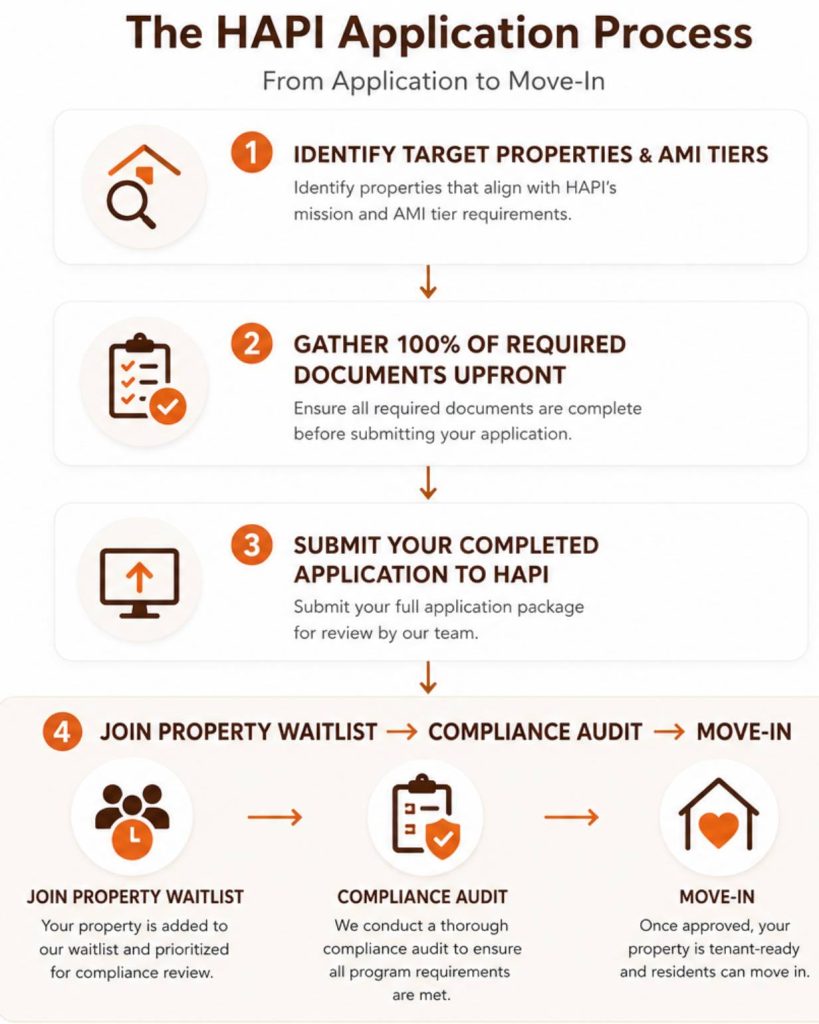
Step 1: Gather Your Document Binder
Missing paperwork is the primary cause of application delays or disqualifications. Before submitting your file, organize these verified documents:
- Proof of Identity: Government-issued photo IDs and Social Security cards for all household members 18 and older, plus birth certificates for all children.
- Income Verification: Three consecutive months of current pay stubs, your most recent federal tax returns, and W-2 forms.
- Alternative Support Letters: Active Social Security, disability (SSDI), child support, or VA benefit award letters.
- Liquid Assets: Three months of complete bank statements from all active accounts.
Step 2: Submit Your Pre-Application
Complete your preliminary pre-application through HAPI’s online portal or submit a physical packet at one of our Oahu management offices. No application fee is charged to establish your initial waitlist position.
Step 3: Waitlist and Lottery Navigation
If you apply for a newly constructed community, your application will likely enter a fair, public housing lottery pool. For existing communities, you will join an active property-specific waitlist. Oahu waitlist times average 6 to 18 months, though 3-bedroom family layouts often require a longer wait due to high demand.
Step 4: Final Compliance Audit and Move-In
When your name reaches the top of the list, a compliance specialist will guide you through a final eligibility interview. We will execute standard criminal background and landlord reference checks to ensure community safety.
Once approved, we will schedule your lease signing, complete an initial walk-through inspection, and hand over your keys. Move-in costs are capped at your first month’s rent portion and a security deposit (limited to one month’s rent).
Tool Spotlight: Track Your Relocation Budget
Ensure your household is fully prepared for upfront moving costs, utility setup charges, and security deposits: Try the Paycheck Pacer Tool
Frequently Asked Questions (FAQ)
Can I apply for an affordable rental if I own real estate?
Most affordable rental programs do not strictly prohibit property ownership. However, federal compliance rules require any net rental income or imputed value from your real estate holdings to be counted toward your household’s annual gross income. If this revenue pushes you past your target AMI ceiling, you will be disqualified.
What happens if I get a raise after moving in?
Under standard Section 42 LIHTC rules, you are protected against sudden displacement if your career progresses. Under the federal 140% Rule, you can remain in your unit safely as long as you were fully eligible on your initial move-in day. Your rent portion may be adjusted during your annual review, but your lease remains secure.
What physical safety standards apply to these units?
To ensure healthy, high-quality living conditions, all subsidized properties on Oahu must pass regular physical evaluations under HUD’s updated NSPIRE (National Standards for the Physical Inspection of Real Estate) protocols. This system prioritizes life-safety systems, including functional 10-year sealed smoke alarms and GFCI outlet safety near all water sources.
Trust a Locally Owned Management Partner
Where you choose to rent is just as important as your eligibility status. Mainland-based property management companies often operate through automated systems that overlook the unique challenges of island living, from regional humidity to local maintenance needs.
HAPI is 100% locally owned and operated. Since 1992, we have managed over 4,000 apartments across 33 projects statewide, utilizing specialized tracking tools from Spectrum Enterprises to process all tenant files and annual recertifications perfectly. Our on-island offices provide responsive property maintenance and face-to-face tenant support, helping you navigate the system with confidence.
Secure Your Family’s Housing Security Today
You have worked hard to build your life in Hawaii, and your ‘ohana deserves a safe, high-quality home with rent costs that leave room in your budget for daily necessities. Don’t spend another year struggling with high market-rate rents. Verify your eligibility, organize your documentation, and take your next step toward stable, affordable housing today.
HAPI: Locally Owned and Trusted Since 1992.