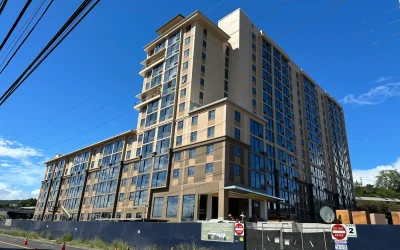
Finding an affordable rental on Maui presents significant hurdles for local working families, tourism employees, and kupuna. Market rents across Central, South, and West Maui regularly exceed $2,100 per month for a modest one-bedroom unit. Combined with the ongoing residential rebuilding efforts in Lahaina, securing stable long-term housing remains a top priority for residents across the Valley Isle.
Subsidized rental programs and Low-Income Housing Tax Credit (LIHTC) communities offer relief by capping monthly rent at rates tied to county income brackets rather than inflated market prices.
At Hawaii Affordable Properties, Inc. (HAPI), we manage affordable rental properties across Maui and statewide. This guide details active 2026 Maui County Area Median Income (AMI) limits, regional rental options in Kahului, Kihei, and Lahaina, and exact qualification steps to help your family secure a home.
2026 Maui County Income Limits: Do You Qualify?
To qualify for an affordable apartment on Maui, your total household gross annual income (before taxes and deductions) must fall below county income caps established by the U.S. Department of Housing and Urban Development (HUD).
These thresholds are indexed annually to reflect Maui’s median wage data. The table below outlines the active 2026 Maui County income ceilings by household size and AMI tier:
2026 Maui County Income Limits by Household Size
| Household Size | 30% AMI (Extremely Low) | 50% AMI (Very Low) | 60% AMI (Workforce Tier) | 80% AMI (Low Income) |
|---|---|---|---|---|
| 1 Person | ~$25,380 | ~$42,300 | ~$50,760 | ~$67,680 |
| 2 People | ~$29,010 | ~$48,350 | ~$58,080 | ~$77,400 |
| 3 People | ~$32,640 | ~$54,400 | ~$65,340 | ~$87,120 |
| 4 People | ~$36,240 | ~$60,450 | ~$72,540 | ~$96,700 |
Data metrics track active 2026 HUD and HHFDC indexing for Maui County. To check exact limits for larger households, use the HAPI AMI Eligibility Checker.
Federal Auditing Rules and Income Verification (HOTMA)
Under current Housing Opportunity Through Modernization Act (HOTMA) federal guidelines, property managers must evaluate all recurring sources of income for adult household members (18 and older).
On Maui, where many residents work in hospitality, food service, construction, or seasonal tourism, compliance managers verify:
- Gross Earnings and Wages: Consecutive pay stubs for full-time, part-time, and seasonal positions.
- Tip Income and Overtime: Documented average cash tips and regular overtime earnings.
- Public Assistance and Payouts: Social Security, disability benefits, child support, and pension statements.
- Liquid Asset Ceilings: Under HOTMA, households holding more than $100,000 in net liquid assets (excluding formal retirement accounts or approved trusts) are legally excluded from participating in income-restricted housing programs.
Regional Breakdown: Housing Options Across Maui
Maui’s distinct regions present different rental markets, commute patterns, and property types.
1. Kahului and Wailuku (Central Maui Hub)
Central Maui serves as the commercial and civic center of the island. Kahului and Wailuku feature multi-family workforce housing and senior independent living communities located near Maui Memorial Medical Center, Queen Ka’ahumanu Center, bus routes, and local schools. Central Maui properties are ideal for hospital staff, retail workers, and municipal employees seeking central island access.
2. Kihei and Wailea (South Maui Corridor)
South Maui houses a large concentration of resort, restaurant, and service workers. Kihei properties focus primarily on workforce rentals at 50% and 60% AMI tiers, giving hospitality employees an affordable option closer to work and reducing long daily commutes from Central or Upcountry Maui.
3. Lahaina and West Maui (Rebuilding and Workforce Rentals)
West Maui continues to transition following the 2023 wildfires. Long-term housing recovery relies on both rebuilt inventory and dedicated project-based subsidies. West Maui affordable properties accept disaster recovery housing vouchers, Housing Choice Vouchers (Section 8), and USDA Rural Development assistance to help displaced families remain in West Maui.
Step-by-Step Maui Application Process
Securing placement in a Maui affordable rental requires completing a structured compliance review:
Maui Affordable Housing Application Lifecycle
| Phase | Operational Step | Required Documents and Deliverables |
|---|---|---|
| Step 1: Property Selection | Identify Maui Community | Review open waitlists in Kahului, Kihei, or Lahaina and match household size to AMI tiers. |
| Step 2: File Compilation | Gather Proof Files | Collect state IDs, Social Security cards, birth certificates, pay stubs, and tax returns. |
| Step 3: Eligibility Audit | HOTMA Income Review | Leasing agents verify income stubs, bank statements, and background checks. |
| Step 4: Lease Signing | Walk-Through and Move-In | Complete physical NSPIRE safety walk-through, execute lease, and receive keys. |
To calculate upfront moving expenses and estimate deposit requirements, review your budget using the HAPI Paycheck Pacer Tool.
Property Safety Standards (NSPIRE)
All subsidized and tax-credit-funded apartments managed on Maui must pass strict safety evaluations under HUD’s NSPIRE (National Standards for the Physical Inspection of Real Estate) framework.
These standards focus on essential safety features, including:
- Functional 10-year sealed smoke alarms in all bedrooms and hallways.
- Working GFCI safety outlets near kitchen sinks and bathroom water sources.
- Mold-free ventilation systems and secure door latching mechanisms.
Frequently Asked Questions (FAQ)
How long are waitlists for affordable housing on Maui?
Wait times depend on property location and unit size. Central Maui family properties average 12 to 24 months, while senior-restricted properties or neighbor island rural communities may have shorter wait times ranging from 6 to 12 months.
Can I use a Section 8 Housing Choice Voucher on Maui?
Yes. Landlords on Maui cannot reject your application solely because you hold a Section 8 voucher. HAPI accepts vouchers across qualifying properties statewide, provided the unit rent falls within HUD payment standards.
What happens if I work two part-time jobs on Maui?
Compliance managers calculate combined gross earnings from both jobs under HOTMA guidelines. You must provide pay stubs or employer verification letters for both positions to establish your total annual income.
HAPI’s Free Online Planning Tools
We provide free interactive digital tools to assist your housing search:
Find Your Affordable Home on Maui
HAPI is 100% locally owned and operated in Hawaii. Managing over 4,000 apartments across 33 projects statewide since 1992, our team is dedicated to supporting local families, kupuna, and working professionals across Maui.
Contact our regional offices today to learn about open property waitlists, verify your income bracket, and take your next step toward housing stability on Maui.
HAPI: Locally Owned and Trusted Since 1992.