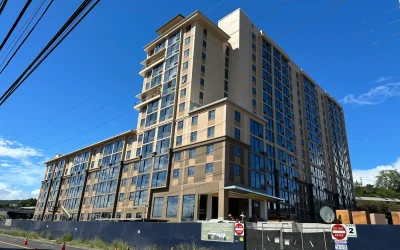
Living and working in Hawaii is a dream for many, but the financial reality of the “Paradise Tax” can quickly turn into a budgeting crisis. In 2026, Hawaii’s median home price continues to hover near $1.1M, and open-market rents for a two-bedroom apartment frequently surpass $2,800 per month. This aggressive real estate environment has left a vast percentage of our local workforce—the very people who keep our communities running—struggling to remain in the islands.
If you earn a steady wage but still find yourself spending more than half of your paycheck on rent, you belong to Hawaii’s “missing middle.” Fortunately, specialized housing programs exist to bridge this gap.
At Hawaii Affordable Properties, Inc. (HAPI), we manage over 4,000 units across 33 projects statewide. This comprehensive guide clarifies the differences between Workforce Housing and Section 8 Vouchers, helping you identify which tier fits your household income and how to secure a stable home in the islands.
Defining the Tiers: Workforce Housing vs. Section 8
A common point of confusion for Hawaii renters is assuming that all “affordable housing” operates under the same rules. In reality, housing programs are strictly divided into distinct tiers based on Area Median Income (AMI). Choosing the wrong program can result in years of unnecessary waiting on closed lists.
1. Section 8 (Housing Choice Vouchers)
The Section 8 program is a federal, deep-subsidy initiative designed primarily for extremely low-to-very-low-income households.
- The Target: Families, seniors, and disabled individuals earning at or below 30% to 50% AMI.
- How it Works: You pay exactly 30% of your adjusted monthly income toward rent, and the government subsidizes the remaining balance directly to the landlord. If you lose your job, your rent portion drops immediately.
- The Wait: Because Section 8 offers the deepest financial relief, waitlists managed by the Hawaii Public Housing Authority (HPHA) are highly competitive and can take 5 to 10 years to clear on Oahu.
2. Workforce Housing (Low-Income Housing Tax Credit – LIHTC)
Workforce housing is designed specifically for moderate-income, gainfully employed professionals who make too much money to qualify for Section 8 but do not earn enough to compete in Hawaii’s private, market-rate sector.
- The Target: Essential workers—including teachers, paramedics, hotel staff, and medical assistants—earning between 60% and 80% (and sometimes up to 120%) AMI.
- How it Works: Rent is fixed and capped based on the unit’s designated AMI tier, rather than fluctuating with your personal paycheck. Your monthly bill remains entirely predictable, allowing you to save money for future homeownership goals.
- The Wait: Because these properties are privately owned and professionally managed, waitlists are property-specific and often move in 6 to 18 months, providing a much faster path to housing security.
Side-by-Side Comparison: Finding Your Fit
| Feature | Section 8 (Housing Choice Voucher) | Workforce Housing (LIHTC/HOME) |
|---|---|---|
| Typical Income Range | 30% to 50% AMI (Very Low Income) | 60% to 80% (up to 120%) AMI |
| Rent Calculation | Adjustable: Exactly 30% of your actual income. | Fixed: Capped rate based on the unit’s AMI tier. |
| Voucher Portability | High: Stays with you if you move islands. | None: Tied to the physical apartment unit. |
| Average Wait Time | 2 to 5+ Years (Oahu) | 6 to 18 Months (Statewide) |
| Best For… | Households on highly limited or fixed incomes. | Local working professionals and young families. |
2026 Income Limits: Which Bracket Fits Your Income?
To qualify for either tier, your household’s total gross annual income (before taxes and deductions) must fall below the county limits published annually by HUD. In 2026, these thresholds have been adjusted upward to reflect the rising cost of living across the islands.
Projected 2026 Income Thresholds (Oahu vs. Big Island)
The table below demonstrates how geographic location impacts your qualification limits. An income that qualifies you for Workforce Housing in Honolulu might make you “over-income” in Hilo.
| Household Size | Oahu 50% AMI (Section 8 Limit) | Oahu 80% AMI (Workforce Max) | Big Island 50% AMI (Section 8 Limit) | Big Island 80% AMI (Workforce Max) |
|---|---|---|---|---|
| 1 Person | ~$53,200 | ~$85,150 | ~$42,350 | ~$67,760 |
| 2 People | ~$60,800 | ~$97,300 | ~$48,400 | ~$77,440 |
| 4 People | ~$76,000 | ~$121,600 | ~$60,450 | ~$96,720 |
Data parameters track 2025-2026 HUD and HHFDC index models. For Maui and Kauai limits, or to calculate your specific multi-member household eligibility, use our custom tool.
Tool Spotlight: Find Your Eligibility Bracket Instantly
Don’t let the math hold you back. Our digital tool compares your exact paychecks against current county-specific limits: 👉 Try the AMI Eligibility Checker
The Math Behind Your Monthly Rent
Understanding how your monthly rent is calculated prevents unexpected budget strains.
The Workforce Housing (LIHTC) Calculation
In a HAPI workforce property, your maximum gross rent is legally capped based on your unit’s AMI tier. The federal calculation is structured as:
Maximum Gross Rent = AMI Limit x AMI Tier x 0.30 / 12
To find your actual out-of-pocket rent, property managers must subtract the county-mandated Utility Allowance if you pay your own electric or water bills:
Maximum Net Rent = Maximum Gross Rent – Utility Allowance
If a 2-bedroom unit at the 60% AMI tier allows a maximum gross rent of $1,800, and your island’s utility allowance is set at $150, your monthly rent payment to HAPI is exactly $1,650.
The Section 8 Voucher Calculation
If you hold an active voucher, your payment is dynamic. If your adjusted monthly income is $3,000, your personal rent portion is restricted to $900 ($3,000 x 0.30). The government subsidy covers the remaining balance up to the local PHA’s payment standard.
To plan your transition costs—including security deposits and first month’s rent—use our budgeting tool: Try the Paycheck Pacer Tool
Frequently Asked Questions (FAQ)
Can I use a Section 8 voucher in a workforce housing unit?
Yes. Many of HAPI’s workforce and LIHTC properties accept Section 8 vouchers. Stacking these programs is highly effective: the LIHTC program caps the building’s maximum rent, and your voucher further subsidizes your personal portion, lowering your monthly out-of-pocket costs.
What happens if I get a raise and exceed the workforce income limit?
In most LIHTC properties, you will not be evicted if your income increases after move-in. Under the federal 140% Rule, as long as you were fully qualified on your initial move-in day, you are allowed to earn up to 140% of the maximum limit before the property’s next-available-unit rules apply. Your lease remains entirely secure.
Do full-time college students qualify for workforce housing?
Full-time students face strict IRS restrictions under Section 42. Generally, a household comprised entirely of full-time students is ineligible unless they meet specific exceptions, such as being a single parent with dependents, being married and filing a joint tax return, or being a former foster youth.
Are there asset limits for workforce housing in Hawaii?
While most tax credit properties do not have a hard “asset cap,” under 2026 HOTMA rules, the income generated by your assets (or an imputed 2% of the value if your assets exceed $50,000) is counted toward your gross annual income total when determining eligibility.
How long are the waiting lists for HAPI workforce units?
Because you apply directly to our individual properties rather than a slow government queue, our property-specific waitlists typically move much faster than Section 8, averaging a 6 to 18-month timeline depending on island turnover.
Why Partner with Hawaii’s Affordable Housing Experts?
Since 1992, HAPI has been the trusted locally-owned choice for housing management. We serve property owners, developers, and residents with a “local-first” heart and “federal-grade” compliance precision.
With physical offices on Oahu and the Big Island, and properties spanning Maui and Kauai, we are always close by when it matters. Our team utilizes a professional Spectrum Subscription for ongoing regulatory support, ensuring your Oahu Residential or Big Island Residential community remains compliant and secure.