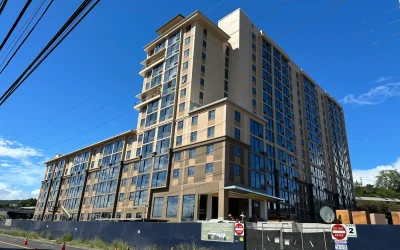
For real estate developers, institutional investors, and affordable asset partners in Hawaii, the Low-Income Housing Tax Credit (LIHTC) program under Section 42 of the Internal Revenue Code is the primary engine for generating development equity. By trading upfront federal and state tax credits for dollar-for-dollar equity injections, developers can build quality multifamily properties that remain financially stable despite low rent ceilings.
However, tax credit equity is not a typical real estate grant—it is an investment tied to strict, long-term regulatory performance. The foundational boundary of any Section 42 development is the 15-year initial compliance period.
Throughout these 15 years, the property must be operated in absolute alignment with federal guidelines and state housing credit agency mandates. A single systemic tracking error can trigger an IRS audit, leading to the severe consequence of tax credit recapture with interest.
In 2026, federal and state housing bodies are increasing audit volumes and introducing stricter screening updates. For asset owners across Oahu, Maui, Kauai, and the Big Island, understanding how to protect your portfolio during the initial 15-year lifecycle—and preparing for the shifts that occur at Year 15—is critical to preserving your capital and shielding your investments from liability.
The Structural Mechanics of the 15-Year Compliance Period
When an affordable housing development is placed in service, the owner signs a binding Declaration of Restrictive Covenants or a Land Use Restriction Agreement (LURA). This contract is recorded against the real estate deed, locking the asset into specific rent-restricted and income-qualified operational structures.
The Distinction Between the Credit Period and the Compliance Period
It is essential for institutional general partners to distinguish between the financial timeline of the credits and the legal timeline of program compliance:
- The 10-Year Credit Period: This is the accelerated timeframe during which investors actively claim their accumulated tax credits to offset their federal and state tax liabilities.
- The 15-Year Compliance Period: This is the mandatory federal window during which the property must maintain strict program compliance. Even though the tax credits are fully claimed by Year 10, the investor’s capital remains at risk of IRS recapture through the end of Year 15.
The Core Compliance Pillars
To maintain a qualified basis and prevent credit adjustments, the property must continuously satisfy three core requirements:
- The Minimum Set-Aside Threshold: The property must meet its elected minimum target—either the 20-50 test (20% of units affordable at 50% AMI), the 40-60 test (40% of units affordable at 60% AMI), or an approved income-averaging structure serving households up to 80% AMI.
- Gross Rent Restrictions: The rent charged for individual units cannot exceed 30% of the designated AMI tier assigned to the unit, adjusted for household size and subtracting mandatory county utility allowances.
- Physical Condition Standard: The asset must pass ongoing physical inspections, which are now scored under HUD’s updated NSPIRE (National Standards for the Physical Inspection of Real Estate) protocols.
Hawaii’s Policy Factor: The Extended Use Period
While federal Section 42 guidelines establish a baseline 15-year compliance window, the Hawaii Housing Finance and Development Corporation (HHFDC) implements stricter long-term requirements.
To score competitively in Hawaii’s annual Qualified Allocation Plan (QAP) application rounds, developers must legally commit to an Extended Use Period. This agreement extends the property’s affordability mandates well beyond the initial 15-year federal horizon:
[Federal Compliance Phase: Years 1-15] ──► IRS Oversight & Tax Credit Recapture Risk
                   │
                   ▼
[HHFDC Extended Use Phase: Years 16-61] ──► State Court Enforcement & Tenant Protections
Under active HHFDC guidelines, Hawaii developments are routinely bound to total affordability commitments spanning 30, 45, or up to 61 years.
Shifts in Regulatory Enforcement After Year 15
Once a property clears its initial 15-year federal hurdle, the regulatory environment changes:
- Recapture Risk Ends: The IRS no longer has the authority to claw back or recapture tax credits from your investors for new non-compliance issues.
- State-Level Enforcement Takes Over: HHFDC retains full authority to monitor the asset. The agency can enforce compliance through state courts, block future allocations for the developer’s pipeline, or issue severe administrative fines.
- Permanent Tenant Rights: Section 42(h)(6) mandates that throughout the extended use window, low-income residents are legally protected against rent increases above program caps and cannot be evicted without good cause.
Critical Year 15 Crossroads: Three Strategic Pathways
Reaching Year 15 is a major milestone for an affordable housing asset. At this stage, the limited partner (LP) investors have fully claimed their financial yield and generally look to exit the partnership, leaving the general partner (GP) with a 15-year-old physical asset.
Owners in Hawaii typically evaluate three potential pathways at this crossroads:
Pathway 1: Portfolio Resyndication
This is often the most effective path for long-term affordable housing operators. In Hawaii’s humid, coastal environment, structural elements like roofs, plumbing networks, and appliances face accelerated wear over 15 years.
By applying to HHFDC for a new round of non-competitive 4% tax-exempt bonds or competitive 9% credits, the GP can buy out the original investors, secure fresh capital to execute major modernizations, and reset the compliance clock for another generation of workforce tenants.
Pathway 2: Partnership Buyout and Debt Refinance
If the underlying asset remains structurally sound, the GP can negotiate a market buyout to purchase the LP’s interest. The GP can then secure conventional multifamily financing or affordable housing debt through agencies like Fannie Mae or Freddie Mac to consolidate the property under local ownership.
The property must continue to operate strictly as affordable housing under the terms of the original recorded HHFDC extended use agreement.
Pathway 3: The Qualified Contract (QC) Process
Some developers look to convert their affordable units into market-rate rentals or condominiums through the Qualified Contract process. In Year 14, an owner can request that HHFDC find a buyer willing to purchase the property at a price determined by a strict, statutory formula.
If HHFDC cannot identify a qualified buyer within a one-year clock, the extended use agreement is terminated, and the owner can begin a mandatory 3-year phase-out period to transition the building to market rates.
Important Compliance Limitation: To protect the island’s affordable inventory, HHFDC aggressively limits this option. Most modern tax credit applications in Hawaii require developers to legally waive their right to request a Qualified Contract to score competitively. If you signed this waiver during your initial allocation, the QC pathway is entirely off the table.
Managing Year 15 Compliance and Financial Options
The table below outlines the core features, capital sources, and regulatory impacts of the primary Year 15 investment pathways.
LIHTC Year 15 Asset Matrix
| Exit & Preservation Strategy | Primary Funding Engine | Long-Term Regulatory Impact |
|---|---|---|
| Resyndication (Rehab Model) | Fresh 4% or 9% tax credit allocations + tax-exempt bond financing. | Resets the 15-year federal compliance clock and extends the affordability window for up to 61 years. |
| GP Investor Buyout | Agency affordable debt refinancing (Fannie Mae / Freddie Mac). | Clears out original tax credit investors; the property stays bound by the active HHFDC extended use agreement. |
| Qualified Contract Transition | Formula-driven acquisition attempt or private asset conversion. | Reopens market-rate options only if HHFDC fails to find a buyer and the owner has not previously waived their QC rights. |
Best Practices to Protect Your Assets During the 15-Year Windows
Most high-cost tax credit recaptures do not stem from intentional violations; they are caused by administrative or bookkeeping errors within tenant certification tracking. To safeguard your investments, enforce these rigorous operational frameworks:
1. Implement Strict HOTMA Income Verifications
Ensure your on-site management team executes detailed Annual Recertifications that strictly comply with modern HOTMA (Housing Opportunity Through Modernization Act) guidelines. This requires auditing irregular self-employment records, verifying student status exemptions, and applying correct income-averaging calculations across your rent rolls.
2. Conduct Proactive Internal File Audits
Do not wait for HHFDC or state monitoring bodies to announce an official inspection. Task your compliance leads with running quarterly internal audits on a random 10% sample of all tenant files. Identifying and resolving clerical errors within a standard correction window prevents the filing of IRS Form 8823.
3. Establish Long-Term Capital Replacement Reserves
To prevent building deterioration that can lead to low NSPIRE scores, allocate consistent funding to your property replacement reserves. HAPI recommends maintaining an annual allocation of at least $300 per unit per year, adjusted for a 3.0% annual inflation rate, to ensure funding is available for major mechanical repairs before they threaten compliance.
Partner with an On-Island Team with Decades of Compliance Experience
Protecting a multi-million dollar LIHTC asset through its 15-year compliance lifecycle requires specialized, focused management procedures. Navigating overlapping county AMI limits, state HHFDC reporting rules, and federal tax codes demands an experienced management partner with local knowledge.
As a locally owned property management firm founded in 1992, Hawaii Affordable Properties, Inc. (HAPI) brings over three decades of regulatory experience to your affordable housing portfolio.
- Centralized Technology Infrastructure: We use cloud-based property management software that automates recertification timelines and maintains digital audit trails for every resident file.
- Professional Consulting Support: Our staff stays updated on changing regulations through specialized consulting resources from Spectrum Enterprises, catching potential compliance issues before they affect your tax status.
- Statewide Footprint: With offices on Oahu and the Big Island, our team of over 200 housing specialists provides local oversight and responsive maintenance across 33 projects statewide.
Secure and Protect Your Real Estate Investments
Maintaining compliance keeps your properties running smoothly and protects your investors’ tax credit equity. Whether you are approaching a Year 15 crossroads and need to structure a buyout strategy, or you are looking for an on-island property management partner to oversee a new tax credit development, HAPI provides the local presence and regulatory experience you need.