Table of content
- What Is Affordable Housing? Hawaii 2026 Eligibility Guide
- The “30% Rule”: How Affordability is Mathematically Measured
- Can You Afford Your Current Lifestyle?
- Who Qualifies? Understanding 2026 AMI Brackets
- 2026 Estimated Income Limits by Island (Family of 4)
- Find Your Bracket Instantly
- The HAPI Advantage: 30 Years of Hawaii Stewardship
- How to Apply: The 2026 Application Roadmap
- Plan for Your Move-In Costs
- Frequently Asked Questions (FAQ)
If you are spending more than half of your paycheck on rent in Hawaii, you are not alone. In 2026, the islands continue to face a significant housing gap, with over 54% of local renters classified as “cost-burdened.” For many families, the dream of living in paradise is often overshadowed by the stress of the 1st of the month.
At Hawaii Affordable Properties, Inc. (HAPI), we believe that everyone deserves a stable, high-quality place to call home. For over 30 years, we have been the bridge between high island costs and quality living, managing 4,000+ apartments across 33 projects on Oahu, Maui, Kauai, and the Big Island.
This guide provides a deep dive into what “affordable housing” actually means in 2026 and provides a clear roadmap for how you can qualify for one of our communities.
The “30% Rule”: How Affordability is Mathematically Measured
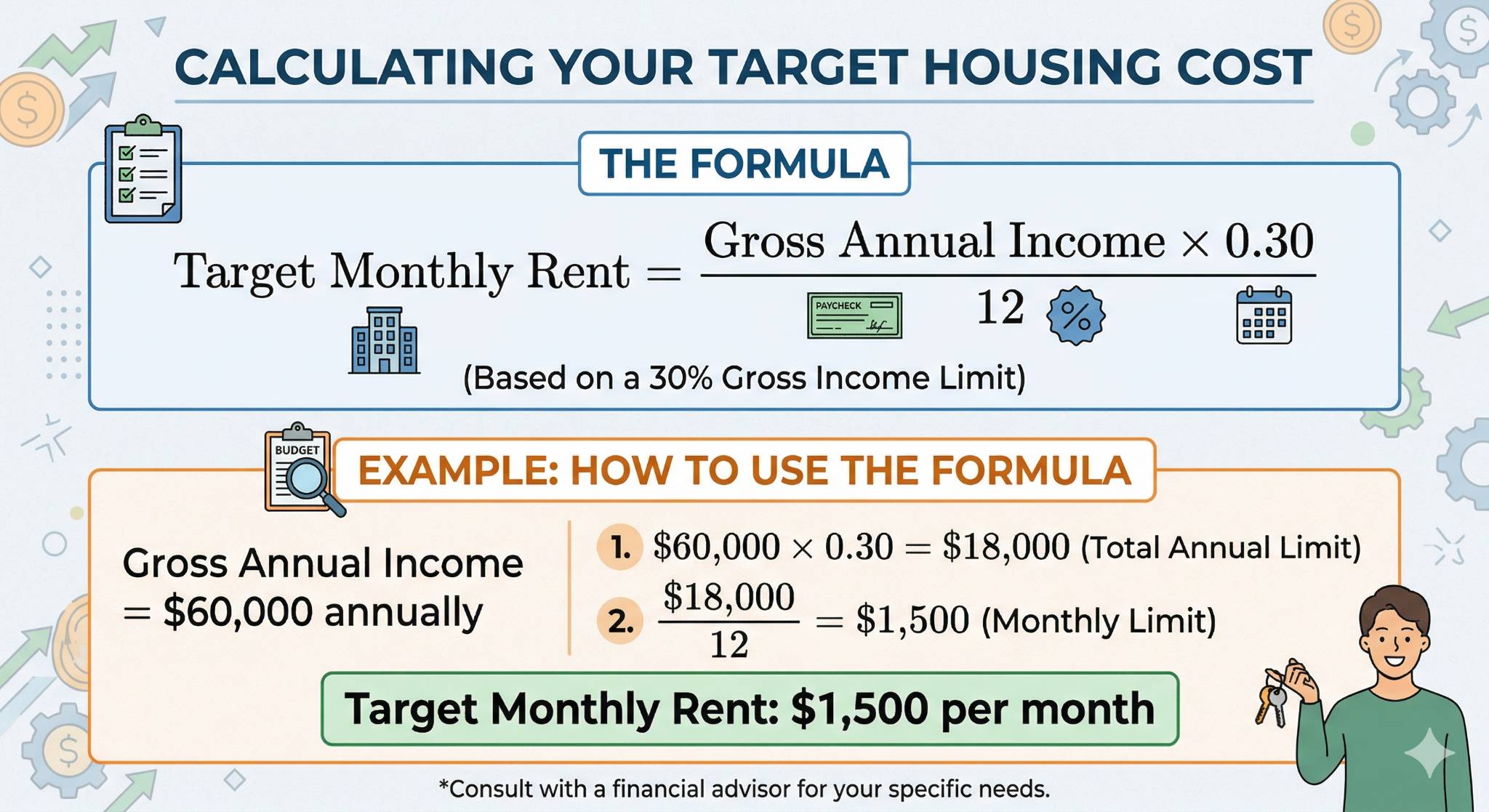
In professional property management and government housing policy, housing is officially considered “affordable” when a household spends no more than 30% of its gross monthly income on rent and utilities combined.
This standard, established by the U.S. Department of Housing and Urban Development (HUD), ensures that families have enough money left over for other essentials like food, transportation, and healthcare. When a family spends 50% or more, they are considered “severely cost-burdened,” which often leads to financial instability.
Can You Afford Your Current Lifestyle?
Living in Hawaii involves more than just rent—electricity and groceries are significant factors. Before you start your search for a new home, see how your current expenses stack up against the actual cost of living in the islands.
Try the Hawaii Real Cost Budgeter
Who Qualifies? Understanding 2026 AMI Brackets
Eligibility for affordable housing is governed by Area Median Income (AMI). AMI is the “middle” income point for a specific island; it is the benchmark used by HUD to set the entry gates for different housing programs.
Because the cost of living varies significantly by county, a family of four in Honolulu has a much higher income limit than a family in Hilo. Limits are based on your Gross Annual Income—your total pay before taxes—for every adult (18+) living in the home.
2026 Estimated Income Limits by Island (Family of 4)
Based on projected 2026 HUD data and HAPI internal compliance standards.
| County / Island | 30% AMI (Extremely Low) | 50% AMI (Very Low) | 60% AMI (Workforce) |
|---|---|---|---|
| Honolulu (Oahu) | Below $45,600 | $45,601 – $76,000 | $76,001 – $91,200 |
| Maui County | Below $42,300 | $42,301 – $70,500 | $70,501 – $84,600 |
| Hawaii (Big Island) | Below $38,100 | $38,101 – $63,500 | $63,501 – $76,200 |
| Kauai County | Below $41,200 | $41,201 – $68,700 | $68,701 – $82,440 |
Find Your Bracket Instantly
Don’t guess your eligibility. Our tool compares your specific household size and income against the real-time 2026 limits for every Hawaiian island.
Check Your AMI Eligibility Now
The HAPI Advantage: 30 Years of Hawaii Stewardship
While many management companies are based on the mainland, HAPI has been locally owned and operated in Hawaii since 1992. Most affordable housing in the U.S. is financed through the Low-Income Housing Tax Credit (LIHTC), a program HAPI has specialized in for over three decades.
- Statewide Scale & Local Roots: With primary management offices on the Big Island and Oahu, and a portfolio valued at over $300M, we offer the stability of a large firm with the responsiveness of a neighbor. We understand island-specific challenges like saltwater corrosion mitigation and termite protection.
- Elite Compliance Expertise: Our team of 200+ professionals specializes in the “Most Restrictive Rule.” We manage the complex overlapping requirements of HUD, LIHTC, and USDA programs simultaneously, ensuring our properties stay safe and our residents stay housed.
- Mixed-Use Community Growth: Beyond residential, we manage 95,000 square feet of commercial space. We specialize in integrating small local businesses into our affordable housing communities to create vibrant, walkable neighborhoods.
How to Apply: The 2026 Application Roadmap
Moving into affordable housing is a document-heavy process. Because HAPI manages government-subsidized funds, we are required by law to verify every dollar of your income and every asset you own.
- Step 1: Pre-Screening: Use our AMI Eligibility Checker to identify which of our 33 projects matches your income level and family size.
- Step 2: Document Gathering (The “Paper Trail”): You will need the last 60 days of consecutive pay stubs, 2 years of federal tax returns, 6 months of bank statements, and Social Security cards for everyone in the household.
- Step 3: Background & Credit Check: We conduct standard credit, criminal, and landlord reference checks. While we are forgiving of medical or student debt, we look for a history of reliable rent payments to ensure our communities stay safe and quiet.
- Step 4: Lease Briefing: Once approved, we walk you through your “fixed rent” structure, community house rules, and maintenance request procedures.
Plan for Your Move-In Costs
Moving into a new home often requires a security deposit and the first month’s rent upfront. Use our tool to calculate how much you should set aside from your current paychecks to hit your goal.
Try the Paycheck Pacer Tool
Frequently Asked Questions (FAQ)
Is "Affordable Housing" the same as "Section 8"?
No. Section 8 is a portable voucher you carry with you. Most HAPI properties are LIHTC, where the discount is tied to the building itself. However, HAPI proudly accepts Section 8 vouchers at nearly all of our projects.
Can I be "over-income" for a unit?
Yes. If your household earns more than the specific AMI limit for a designated unit, we cannot legally rent it to you. This ensures these specialized homes remain available for the families who need them most. According to the National Low Income Housing Coalition, there is a massive shortage of units for those with the lowest incomes, which is why these rules are strictly enforced.
What happens if I get a raise after I move in?
In most of our LIHTC properties, you will not be evicted if your income increases. Under the “140% Rule,” your rent remains capped, though it may be adjusted to the maximum allowed for that unit’s AMI bracket during your next annual recertification.
How long are the waiting lists in 2026?
Wait times fluctuate by island. Our Big Island properties often move faster than our Oahu portfolio. We recommend applying to multiple property-specific waitlists simultaneously to increase your chances.
Do affordable housing programs actually work for the community?
Yes. Research from the Urban Institute shows that families in stable affordable housing experience 20% fewer emergency room visits and significantly better health outcomes. Furthermore, well-maintained affordable housing does not decrease surrounding property values.
I’m in a crisis and need a home today. What should I do?
While our waitlists can take time, we know that emergencies happen. If you are facing an immediate housing crisis, use our community locator to find local shelters, food banks, and emergency rental assistance. 👉 Explore the Resource Compass
Ready to Find Your Affordable Home?
Don’t spend another year struggling with market-rate rents that consume your entire paycheck. Join the 10,000+ residents who have found stability and peace of mind with Hawaii Affordable Properties.