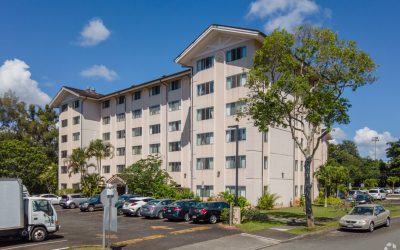
If you are navigating the affordable housing market in Hawaii, you have probably heard the terms “Section 8” and “LIHTC” thrown around constantly. For many local renters, these terms are used interchangeably. It is incredibly common for applicants to walk into a HAPI leasing office and say, “I’m here to apply for your Section 8 apartments.”
The truth is, these are two entirely different programs with completely different rules for how your rent is calculated.
To clear up the confusion immediately: Section 8 is a government voucher tied to you, where your rent adjusts based on your income (you generally pay 30% of what you make). LIHTC, on the other hand, is a specific building where the rent is a flat, discounted rate based on local income brackets, regardless of your personal paycheck fluctuations.
Understanding the difference between these two programs is the key to budgeting correctly and avoiding a financial shock. Here is your definitive 2026 guide to Section 8 versus LIHTC in Hawaii.
What is LIHTC (Low-Income Housing Tax Credit)?
The rent is tied to the apartment, not your paycheck.
The Low-Income Housing Tax Credit (LIHTC) program is the most common type of affordable housing built in Hawaii today. In this program, developers receive federal and state tax credits to build the apartment complex. In exchange, they must agree to rent the units to families earning below a certain Area Median Income (AMI) bracket (usually 60% AMI or below) for a minimum of 15 to 30 years.
- How Rent is Calculated: The rent for a LIHTC apartment is a fixed, flat rate set by the federal government, based entirely on the median income of Honolulu (or your specific county), not your personal income. For example, a 2-bedroom apartment designated for a family at the 60% AMI level might have a fixed rent of $1,600 a month.
- Rent Increases: Unlike market-rate apartments, your landlord cannot arbitrarily raise your rent whenever they want. Rent increases only happen once a year if the Department of Housing and Urban Development (HUD) announces that the overall median income for the county has gone up.
- The Catch: Because the rent is fixed, it does not adjust if your personal financial situation changes. If you make $60,000 a year, your rent is $1,600. If you lose your job tomorrow and make $0, your rent is still $1,600. You are completely responsible for paying that flat rate every month, as there is no direct government subsidy paying the landlord on your behalf.
What is Section 8 (Housing Choice Voucher)?
The rent adjusts to your actual income.
Section 8, officially known as the Housing Choice Voucher program, is managed by the Hawaii Public Housing Authority (HPHA) or local county agencies. In this program, the government gives you (the tenant) a voucher to help pay your rent in the private market.
- How the Voucher Works: The most common type is a “tenant-based” voucher. This means the voucher belongs to you, not the building. You can take it to any private landlord in Hawaii who is willing to accept it, provided the apartment passes a strict health and safety inspection (Housing Quality Standards).
- How Rent is Calculated: With a Section 8 voucher, your rent is strictly tied to your actual, verified income. You are generally required to pay 30% to 40% of your adjusted gross monthly income toward rent and utilities. The government agency pays the remaining balance directly to the landlord each month.
- The Benefit: It provides the ultimate financial safety net. If you lose your job, your work hours are cut, or you experience a medical emergency that drains your income, you simply report the income loss to your caseworker. They will recalculate your portion, and your out-of-pocket rent might drop to $50 a month until you find a new job.
The Perfect Match: Can I Use Section 8 at a LIHTC Property?
Yes! You can stack them.
This is where the magic happens for many Hawaii renters. You can absolutely use a Section 8 voucher to rent a LIHTC apartment. By law, LIHTC properties (like the ones managed by HAPI) cannot discriminate against you just because you have a voucher. If you find an available LIHTC apartment and you pass the building’s background and credit checks, you can hand your voucher to the property manager.
When you combine them, you get the benefit of living in a brand-new, beautiful LIHTC community, while enjoying the financial safety net of your Section 8 voucher adjusting your personal rent portion.
Quick Reference: Program Differences
Here is a side-by-side look at how the two primary Hawaii affordable housing programs compare:
| Feature | LIHTC (Tax Credit) Property | Section 8 (Housing Choice Voucher) |
|---|---|---|
| Who Manages It? | Private Property Management (like HAPI) | Government Agencies (HPHA, County) |
| Rent Amount | Flat / Fixed Rate (Based on AMI brackets) | Adjustable (Usually 30% of your income) |
| Portability | Stays with the apartment. If you move, you lose the deal. | Stays with the tenant. You can take the voucher to a new rental. |
| Job Loss Impact | Rent stays exactly the same. | Your rent portion decreases. |
| Waitlist Speed | Varies by building. Often 6 months to 3 years. | Extremely slow. Often closed for years at a time. |
Frequently Asked Questions
Does HAPI manage Section 8 vouchers?
No. Property management companies do not issue or manage Section 8 vouchers. You must apply for a voucher directly through the government (HPHA or the City & County). HAPI strictly manages the physical apartment buildings and processes your application to live there.
Which waitlist should I apply for?
Both! You should apply for the government Section 8 waitlist whenever it opens, but because it can take 5 to 10 years to get a voucher, you should also apply directly to individual LIHTC property waitlists (like those managed by HAPI), which usually move much faster.
If I use my voucher at a LIHTC property, do I have to recertify twice?
Yes. You will have to complete an annual recertification with your Section 8 government caseworker to keep your voucher, and you will have to complete a separate annual recertification with the HAPI property manager to keep the LIHTC apartment.
What happens to my LIHTC apartment if I get a massive raise?
Under LIHTC rules, if your income goes up after you move in, you are protected by the “140% Rule.” Your rent remains capped, and you will not be evicted for making too much money.
What happens to my Section 8 voucher if I get a massive raise?
If your income increases to the point where 30% of your income covers the entire monthly rent, the government will no longer pay a subsidy on your behalf. After a certain period (usually 6 months of zero subsidy), your voucher will expire and be given to the next family on the waitlist.
Ready to Find Your Next Home?
Whether you are bringing a Housing Choice Voucher or simply looking for a fixed-rate affordable apartment, we have beautifully maintained communities across the island ready for you.