Table of content
It is the most common frustration we hear from local renters: “I make too much to qualify for affordable housing, but I don’t make enough to survive.”
If you are a teacher, nurse, construction worker, or young professional in Hawaii, you likely fall into what urban planners call the “Missing Middle.” You earn a solid salary—maybe $70,000 to $90,000 a year—which immediately disqualifies you from Section 8 vouchers or deep-subsidy apartments. Yet, when you look at the open market, a standard two-bedroom apartment in Honolulu costs upwards of $3,000 a month.
You are stuck in the middle. But there is a solution that many renters don’t know exists: Workforce Housing.
At HAPI, we manage properties across the entire income spectrum, not just low-income units. Here is the definitive 2026 guide to understanding Workforce Housing, finding 100% AMI apartments on Oahu, and keeping your roots in Hawaii.
What is Workforce Housing?
Housing designed for the local workforce, not luxury investors.
When people hear “affordable housing,” they usually think of properties restricted to people earning below 60% of the Area Median Income (AMI). Those are heavily subsidized units (often called LIHTC properties) with massive waitlists.
Workforce Housing is different. These are apartments specifically built for moderate-income earners. The state and city provide developers with incentives to build these units, and in exchange, the rents are capped based on the 80% to 140% AMI brackets.
- Who it is for: Essential workers, young families, state employees, and dual-income households who are priced out of luxury market-rate buildings.
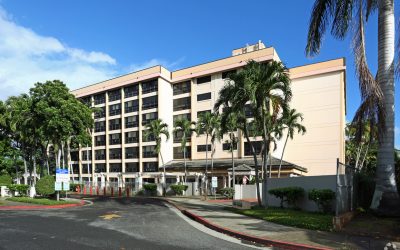
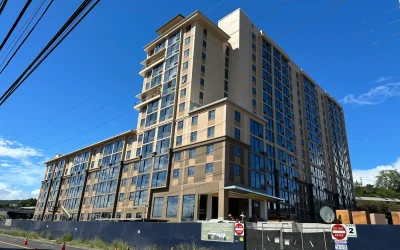
- What it looks like: Workforce housing units are completely indistinguishable from market-rate units. They are often located in brand-new, modern high-rises in Kaka’ako, Moiliili, or Kapolei, complete with gyms, co-working spaces, and secure parking.
- The Rent Cap: The rent is legally capped by the government, meaning the landlord cannot suddenly raise your rent by $500 next year just because the market is hot. Your rent increases are tied to regional wage growth, offering incredible stability.
Understanding the “Middle” AMI Math
How to know if you fit the bracket.
To qualify for Workforce Housing, you must fall into a specific income “window”—you cannot earn too much, but you also must earn enough to cover the rent (usually 2.5 times the monthly rent amount).
Here is how the 2026 math roughly looks for a 100% AMI bracket in Honolulu (subject to annual HUD updates):
- Single Person: Earning up to ~$95,000/year.
- A Couple (2 people): Earning up to ~$108,000/year combined.
- A Family of 4: Earning up to ~$135,000/year combined.
If you and your partner both make $50,000 a year, your combined household income is $100,000. You would perfectly qualify for a 100% AMI workforce apartment, unlocking a beautiful, brand-new unit for significantly less than a comparable luxury condo on Zillow.
Tool Tip: Stop guessing your bracket. Use our AMI Eligibility Checker to instantly calculate your household size and income against the official 2026 Hawaii limits.
2026 Honolulu Rent Comparison: Workforce vs. Market Rate
See the actual dollar difference of living in the “Middle.”
Why go through the hassle of income verification? Because the financial payoff is life-changing.
When searching for “Honolulu apartment prices 2026,” you will quickly see that open-market rents are outpacing local wages. Workforce housing legally limits what a landlord can charge you. Below is an estimated comparison of standard market-rate rents in town versus a state-capped 100% AMI Workforce Housing unit:
| Unit Size | Average Market Rent (Honolulu) | 100% AMI Workforce Rent (Capped) | Your Monthly Savings | Your Annual Savings! |
|---|---|---|---|---|
| Studio | $1,850 / month | **$1,500 / month** | $350 | *$4,200 / year* |
| 1-Bedroom | $2,350 / month | **$1,750 / month** | $600 | *$7,200 / year* |
| 2-Bedroom | $3,100 / month | **$2,100 / month** | $1,000 | *$12,000 / year* |
Note: Estimates based on projected 2026 HUD/HHFDC limits. Actual rents vary by specific building and utility allowances.
By securing a workforce unit, a growing family in a 2-bedroom apartment can save $12,000 a year. That is a down payment fund, a college fund, or simply breathing room in your budget.
Tool Tip: Want to see how these savings affect your overall lifestyle? Plug these lower rent numbers into our Hawaii Real Cost Budgeter to visualize your new monthly cash flow.
The Application Process for Workforce Units
It is faster than Section 8, but requires strict paperwork.
The best secret about Workforce Housing is that the waitlists are often dramatically shorter than low-income housing waitlists. Because the income requirements are higher, the applicant pool is smaller. Sometimes, buildings even have immediate availability.
However, the compliance paperwork is still rigorous. To get the keys, you must prove you truly belong in the middle bracket.
- Standard Screening: You must pass a standard credit and background check. A poor credit score can disqualify you, even if your income is perfect.
- Strict Income Verification: You must provide consecutive paystubs (usually the last 4 to 6), W-2s, and recent tax returns.
- Asset Testing: Some workforce programs limit how much cash or assets you can have in the bank. If you have $200,000 sitting in a stock portfolio, you might be disqualified, even if your salary is low.
- The Sworn Affidavit: You will sign legal documents certifying that the income you reported is accurate and complete.
How to Find Workforce Housing on Oahu
Stop scrolling Zillow and start looking at specialized management.
You will rarely find workforce housing advertised on Facebook Marketplace or Craigslist. These units are managed by specialized affordable housing firms like HAPI because the state requires strict annual compliance reporting.
To find these units:
- Target the Right Neighborhoods: Look for new development zones. Kaka’ako (under HCDA rules), the Ala Moana transit corridor, and the growing areas of Kapolei are hotspots for new workforce high-rises.
- Check the State Portals: The HHFDC maintains a list of affordable properties, but availability isn’t always updated daily.
- Apply Directly with Management: The most reliable way to get a unit is to check our Available Properties List. When a 100% or 120% AMI unit opens up, we list it directly on our site.
Frequently Asked Questions
What happens if I get a raise at work? Do I get evicted?
Usually, no. For most workforce housing programs (like LIHTC or HCDA), you only need to qualify at the time of your initial move-in. If you get a promotion in Year 2 and your income goes over the limit, you are generally allowed to stay in your unit. Your rent will simply continue to be based on the capped affordable rate. (Always check your specific lease, as programs vary).
Can I rent a workforce unit if I own a house?
No. Almost all Hawaii affordable housing programs require that the applicant does not own a majority interest in real estate anywhere in the world. These units are strictly for primary renters.
Are these units rent-controlled forever?
No. Workforce housing buildings usually have an “affordability period” mandated by the government (often 10, 15, or 30 years). During that time, rents are capped. Once the period expires, the building can convert to market rate. However, as a tenant, you will have years of stable, predictable rent.
Do workforce housing apartments allow pets?
This depends entirely on the building’s specific rules, not the state’s affordable housing laws. Many new workforce buildings are pet-friendly (with breed and weight restrictions). Note that verified Assistance Animals are always permitted by law.
Stop Settling for Overpriced Rentals
If you are working hard in Hawaii, you deserve a high-quality place to live that doesn’t drain your entire paycheck. Check your AMI, gather your paystubs, and start looking at workforce options.