Table of content
- The Strategic Guide to Affordable Housing Management Pricing in Hawaii (2026)
- What Drives Affordable Housing Management Costs?
- 1. Compliance Administration (The “Shield”)
- 2. Operational Management (The “Engine”)
- 3. Investor & Agency Reporting (The “Transparency”)
- 2026 Service Tiers & Pricing Structure
- Why Affordable Housing Management Costs More Than Conventional
- B2B Tool: Protect Your Revenue Stream
- What is Included in Your HAPI Management Fee?
- Protecting Your Investment: The HAPI ROI
- Pricing & Service FAQ for Owners
For property owners and developers in the Hawaiian Islands, the “cost” of property management is often misunderstood. In the conventional market, fees are largely driven by leasing velocity and maintenance overhead. However, in the Affordable Housing sector, management pricing is driven by one critical factor: Compliance Risk Mitigation.
At Hawaii Affordable Properties, Inc. (HAPI), we have spent over 30 years managing the most complex regulatory environments in the Pacific. With a portfolio of 4,000+ units across 33 projects, we know that a “cheap” management fee can become the most expensive mistake an owner makes if it results in an IRS Form 8823 filing or a loss of tax credits.
In 2026, as HUD and HHFDC regulations become increasingly stringent, our transparent pricing reflects the specialized labor required to keep your assets audit-ready every single day.
What Drives Affordable Housing Management Costs?
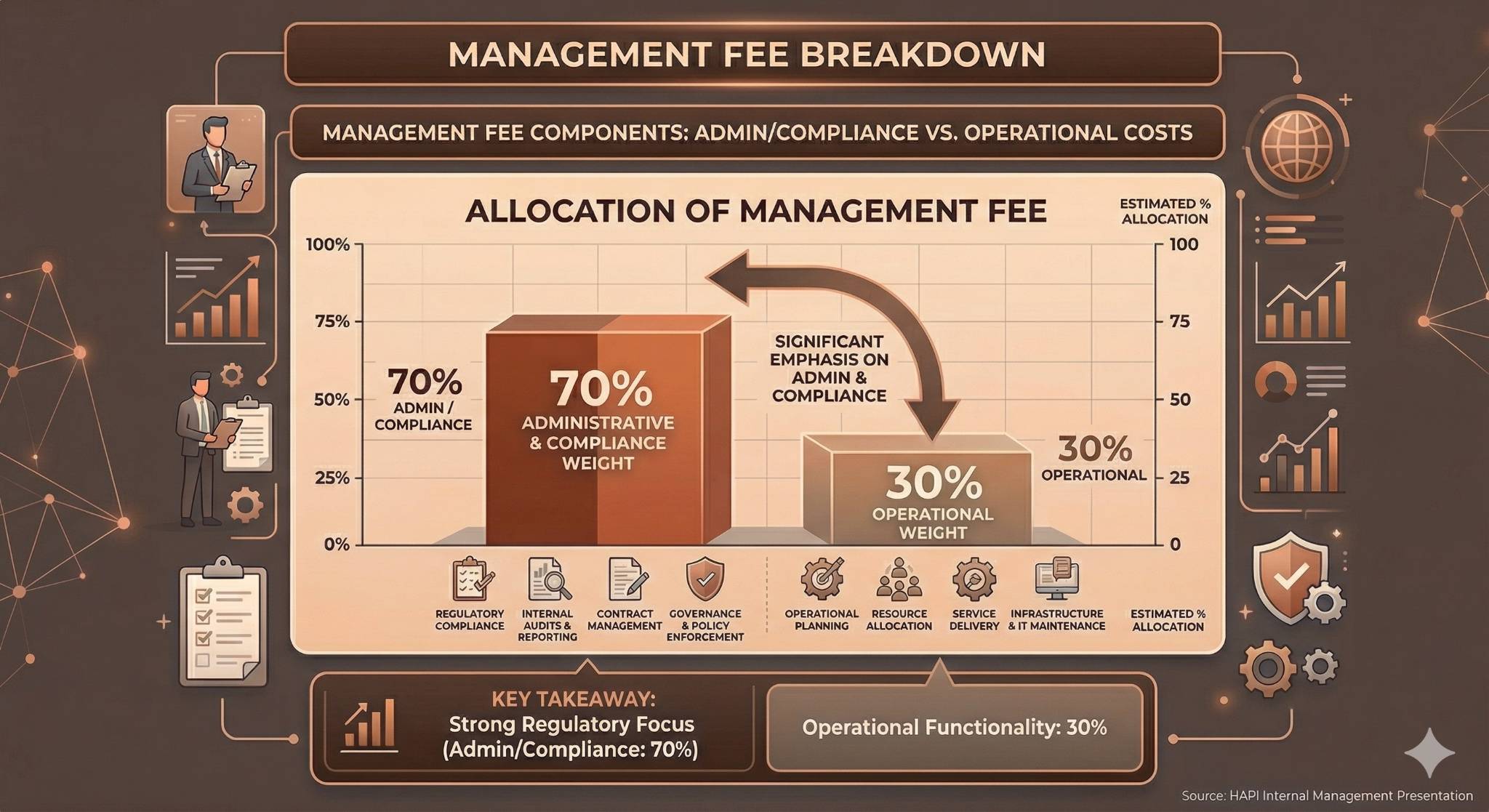
Unlike conventional rentals, affordable housing demands a massive administrative “back-office” to satisfy federal, state, and county requirements. When you review a management proposal from HAPI, your fee covers three distinct pillars of professional stewardship:
1. Compliance Administration (The “Shield”)
This is the most labor-intensive part of the fee. It includes the continuous income verification of every household, annual recertifications, rent limit calculations, and the submission of monthly regulatory reports for programs like LIHTC, HUD Section 8, USDA, and HOME.
2. Operational Management (The “Engine”)
This covers the day-to-day “boots on the ground” across Oahu, Maui, Kauai, and the Big Island. From 24/7 emergency maintenance response to rigorous tenant screening and vendor coordination, we manage the physical integrity of your $300M+ portfolio.
3. Investor & Agency Reporting (The “Transparency”)
We provide the sophisticated financial reporting required by institutional lenders, tax credit investors, and housing finance agencies. This ensures your capital stack remains stable and your stakeholders remain informed.
2026 Service Tiers & Pricing Structure
We tailor our management agreements to the specific complexity of your LURA (Land Use Restriction Agreement). Below is a breakdown of how we structure our 2026 service tiers:
| Service Tier | Best For… | Core Focus | Pricing Model |
|---|---|---|---|
| Essential Compliance | Single-program properties (e.g., just LIHTC) | Program-specific audits & leasing | Fixed Fee Per Unit/Month |
| Full-Service Management | Mixed-income or multi-program assets | Comprehensive ops + HUD/USDA coordination | % of Gross or Fixed Fee |
| Portfolio Strategic | Institutional owners with 3+ properties | Asset management & lender relations | Custom / Portfolio Volume |
Why Affordable Housing Management Costs More Than Conventional
It is a common question from new developers: “Why are fees higher than a standard Waikiki condo manager?” The answer lies in the specialized certifications required to manage your risk.
- LIHTC Properties: We manage 15-year compliance periods and extended-use agreements. This requires a dedicated Compliance Department that monitors every move-in against current AMI limits.
- HUD & USDA 515: These programs require Housing Quality Standards (HQS) inspections and specialized rent-reasonableness studies.
- The “Spectrum” Standard: HAPI maintains a subscription to Spectrum Professional Tax Credit Consulting Service. This means our staff receives the highest level of national training, identifying regulatory shifts before they affect your bottom line.
B2B Tool: Protect Your Revenue Stream
For owners, “Management” is synonymous with “Collection.” Even a 2% dip in collection can derail a project’s pro-forma. Use our tool to visualize how late payments and administrative delays impact your annual ROI.
What is Included in Your HAPI Management Fee?
We believe in “No-Surprise” pricing. Our base management fees are comprehensive, covering the entire lifecycle of a tenant’s residency.
Standard Inclusions (No Extra Charge):
- Annual tenant income recertification and documentation.
- Rent calculation per 2026 HUD/AMI requirements.
- Move-in/Move-out inspections with photo documentation.
- Waiting list administration and Fair Housing compliance.
- Monthly financial statements and regulatory agency reporting.
Specialized Services (Billed Separately):
- Major capital project management (e.g., roof replacements).
- Legal eviction proceedings (coordinated with legal counsel).
- Environmental compliance audits or specialized refinancing consulting.
Protecting Your Investment: The HAPI ROI
Effective management reduces your total cost of ownership. By averaging an 85% annual tenant retention rate across our portfolio, we significantly reduce turnover costs—the biggest “silent killer” of property revenue in Hawaii.
How We Control Your Costs:
- Avoid Penalties: One failed audit can lead to a loss of millions in tax credits. Our certified staff prevents violations before they occur.
- Zero Markup on Vendors: We pass through maintenance and repair costs at actual invoice amounts. We do not take “kickbacks” or markups on contractor work.
- Economies of Scale: With 4,000+ units, we have the leverage to negotiate better rates for insurance, supplies, and specialized labor.
Pricing & Service FAQ for Owners
How do you calculate fees for mixed-income properties?
We use a blended pricing model. Units that require LIHTC or HUD compliance are billed at a rate reflecting that administrative burden, while market-rate units in the same building are billed at standard operational rates.
Are there setup fees for transitioning a property?
No. At HAPI, we do not charge “onboarding” or setup fees. We view the transition as an investment in a long-term partnership.
What happens if a property fails a compliance audit?
In our 30-year history, we have maintained an industry-leading record of successful reviews. However, if a finding occurs, our team handles the remediation and response to the state agency at no additional charge to the owner.
How does your pricing compare to hiring an in-house team?
Managing in-house requires hiring a certified Compliance Officer, an Accountant, and on-site staff. For most owners, the “all-in” cost of an in-house team is 30-50% higher than HAPI’s professional management fee, which provides built-in redundancy and expertise.
Do you manage commercial spaces?
Yes. We currently manage 95,000 square feet of commercial space in Hawaii. We specialize in mixed-use developments where commercial income supports the overall project’s affordability goals.
Is there a long-term contract requirement?
Most of our agreements are annual, with standard 90-day termination clauses. We believe our performance is the best way to ensure contract renewal.
Get a Custom Proposal for Your Hawaii Portfolio
No two affordable housing projects are the same. Your pricing should reflect your specific program mix, unit count, and physical condition.
Contact our leadership team today for a no-obligation management proposal and a consultation on how to optimize your Hawaii asset for 2026.